
Jiu-jitsu turns uncertainty into a learnable skill by teaching you how to stay calm, test options, and adapt in real time.
In our classes, problem-solving is not a side benefit of Jiu-jitsu. It is the core of what happens every time you train. You are constantly reading a situation, choosing an option, feeling immediate feedback, and then adjusting with purpose. That cycle is simple, but it is powerful, and it carries into work, school, and everyday stress.
People often think of grappling as purely physical, but the truth is that your brain is working the whole time. You are planning, noticing patterns, and making decisions under pressure. Over time, those repetitions build habits that look a lot like mature problem-solving: staying present, keeping your ego in check, and trying again with better information.
For many locals looking for Jiu-jitsu in Montgomery, NJ, the appeal starts as fitness or self-defense. What surprises most students is how quickly training begins to shape the way you approach hard problems away from the mat, too. You start to ask better questions, slow down your reactions, and search for the highest-percentage solution instead of the fastest one.
Why Jiu-jitsu Is Problem-Solving Practice Disguised as Training
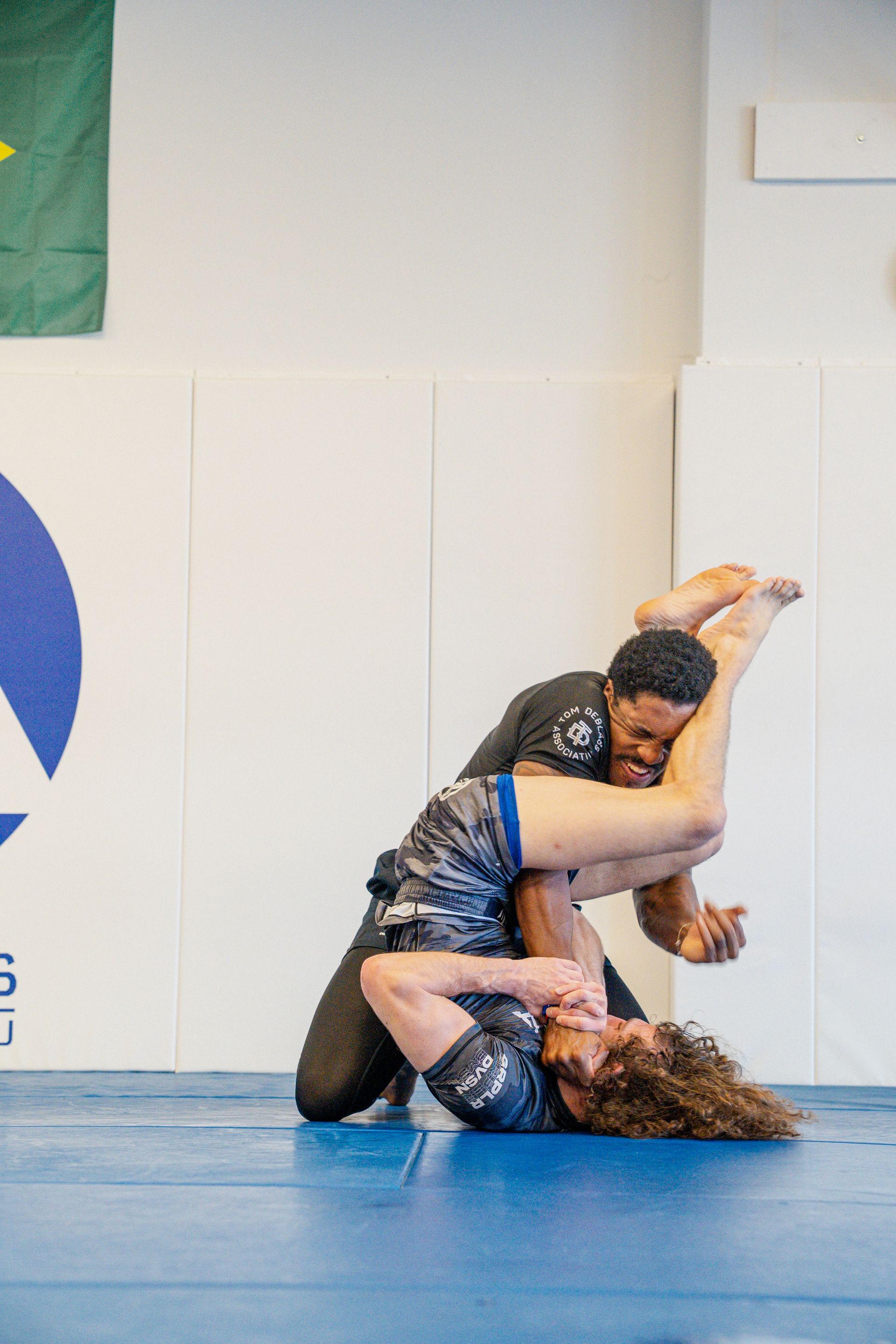
Every round of sparring is a moving puzzle. Your partner gives you a live, unpredictable problem, and your job is to respond intelligently without panicking. You learn to process what is happening right now, not what you wish were happening. That present-moment focus is a big reason why Jiu-jitsu is so effective at building cognitive flexibility, meaning you get better at switching strategies when your first plan stops working.
This is not theoretical. If you try a sweep and it fails, you do not get to pause the moment and negotiate. You have to feel why it failed and move to the next best option. That is real-time decision-making, and it is one of the most transferable skills we see students develop.
The best part is that you can practice this without needing to be naturally athletic. Because Jiu-jitsu rewards leverage, timing, and positioning, you can start learning the problem-solving mindset on day one. You do not need perfection. You need curiosity and consistency.
The On-the-Mat Framework: Try, Adjust, Retry
We structure training so you do not just collect techniques. You learn a method for building solutions. You drill a movement, test it with a partner, notice what breaks, and then refine. That is exactly how strong problem-solvers operate in the real world: run a small experiment, gather feedback, and improve.
When students get stuck, we encourage a practical question: what is the problem you are actually trying to solve? Sometimes the issue is not strength or speed. It is angle, posture, breathing, or a missing detail. Learning to diagnose the real problem, instead of guessing, is a skill you can use in meetings, projects, and even tough conversations.
Here is the simple pattern that shows up in almost every class:
1. Define the goal clearly, like controlling distance, escaping pressure, or improving position
2. Choose one high-percentage option and commit to it with good mechanics
3. Pay attention to what your partner does to stop you
4. Make one adjustment, not five, so you learn what changed the outcome
5. Repeat until the solution works under realistic resistance
That sequence is not flashy, but it builds a calm, repeatable approach to solving hard problems. Once you internalize it, you start using it everywhere without even trying.
Learning to Think Under Pressure Without Freezing
Pressure changes people. In everyday life, pressure looks like deadlines, conflict, or the feeling that you have to make the right call quickly. On the mat, pressure is more literal. You may have someone controlling you, restricting movement, and forcing you to stay composed.
This is where Jiu-jitsu shines as a training tool for decision-making. You practice breathing, staying organized, and making small, correct choices even when your body wants to rush. Over time, that becomes emotional stability. Research on Brazilian Jiu-jitsu training has connected consistent practice to improved emotional regulation, communication, and decision-making strategies in uncertain conditions, which matches what we watch students build in class.
We also treat tapping as a normal part of learning, not a failure. That matters because problem-solving requires a willingness to test ideas, and testing ideas means sometimes being wrong. When you get comfortable with safe failure, you become more resilient. You take feedback, reset, and keep going.
Strategic Thinking: Building Plans, Not Just Moves
Beginners sometimes assume the goal is to memorize techniques. In reality, the deeper skill is knowing when to use them and why. Strategy in Jiu-jitsu means understanding cause and effect: if you control a hip line, you limit movement; if you win inside position, you can create angles; if you break posture, you can slow your partner down.
As you progress, you begin to stack decisions like a chess player, but with real consequences and real timing. You learn to create dilemmas, offering your partner two bad choices and then taking the opening your partner gives you. This kind of strategic thinking is a direct match for professional problem-solving, where the best solutions often come from setting conditions, not forcing outcomes.
Creativity shows up here, too. Not every round goes the way you expect. Sometimes the room feels a little loud, your partner is heavier, and your first plan disappears instantly. That is when you improvise, and improvisation is a problem-solving skill. You learn to adapt without spiraling into frustration.
Adaptability: Using Feedback Instead of Fighting It
A common misconception is that strong problem-solvers always have the answer. More often, strong problem-solvers are simply willing to update the answer. Jiu-jitsu builds that mindset because your partner is constantly giving you information. Every grip break, every escape, every scramble is feedback.
We teach students to treat feedback as data. If you cannot keep a position, we look at the reason. Are you leaving space? Is your weight in the wrong place? Are you trying to rush the finish? That habit of calmly investigating the cause helps off the mat as well. Instead of saying, this is not working, you start asking, what specifically is not working?
This is also where consistent training becomes a quiet advantage. You do not need dramatic breakthroughs. You need steady exposure to small problems and steady practice solving them. That is how adaptability becomes part of your personality, not just something you do once in a while.
Partner Training Builds Collaborative Problem-Solving
Even though grappling is one-on-one, learning is not solitary. You train with partners of different sizes, ages, and experience levels, which forces you to communicate and adjust. That interaction builds a practical kind of teamwork. You have to listen, ask good questions, and offer useful feedback.
In our room, students develop leadership in a natural way. More experienced students help newer students with details, pacing, and perspective. That process improves understanding for both people. Teaching is problem-solving, too, because you have to figure out what is actually blocking someone’s progress and explain it in a way that clicks.
You also learn trust. You practice safely, respect boundaries, and learn how to push intensity without losing control. That ability to stay grounded and respectful in a challenging moment is emotional intelligence, and it shows up at home and at work.
How These Skills Transfer Off the Mat in Montgomery Life
Life in and around Montgomery moves fast. People juggle school schedules, commuting, demanding jobs, and family responsibilities. The reason problem-solving matters is simple: the better you handle uncertainty, the less stress runs your day.
We see students apply Jiu-jitsu habits in ways that are practical and honestly kind of understated. You might notice you pause before reacting in a heated conversation. You might break a big project into smaller steps. You might recover faster after a bad day because you are used to resetting and trying again.
Here are a few off-the-mat problem-solving outcomes we commonly train toward, without needing a separate lecture:
• Clear thinking under stress, because you practice staying calm while solving physical problems
• Better prioritization, because you learn what matters most in a position and stop chasing distractions
• Increased confidence, because you earn progress through consistent work, not hype
• Stronger communication, because partner training requires feedback, timing, and respect
• A healthier relationship with mistakes, because tapping and adjusting are part of the process
This is one reason adult Jiu-jitsu in Montgomery, NJ fits so well for busy professionals and parents. The skills are not abstract. You can feel them showing up in real time, and then you notice them later when life gets complicated.
What to Expect When You Start: The Beginner Problem-Solving Mindset
Starting can feel intimidating, mostly because everything is new. We keep the early experience structured so you have a clear path. You learn foundational positions, basic escapes, and a few reliable attacks, but more importantly, you learn how to learn. That means showing you the purpose of each movement and how to measure improvement.
A detail we emphasize early is pacing. Many new students try to solve every moment with intensity. Jiu-jitsu teaches you to solve problems with efficiency instead. You learn to use frames, posture, angles, and timing, which is a nice reminder that brute force is rarely the best solution in life, either.
If you are returning to training after years away from sports, that is fine. If you are fit but new to grappling, also fine. The process works because it is progressive, and because the room gives you constant feedback in a controlled, safe environment.
Take the Next Step
Building real problem-solving skills takes practice, and our training gives you a place to do that in a way that is challenging but structured. At Montgomery Brazilian Jiu-Jitsu, we focus on the habits that make Jiu-jitsu work: staying present, making smart decisions under pressure, and learning through repetition that actually feels meaningful.
If you are interested in Jiu-jitsu in Montgomery, NJ for fitness, self-defense, or a mental reset that carries into the rest of your week, we would love to help you get started and find a rhythm that fits your life at Montgomery Brazilian Jiu-Jitsu.
Take what you learned here and apply it on the mats by joining a Brazilian Jiu-Jitsu class at Montgomery BJJ.