
You do not need to be “in shape” or fearless to start, you just need a clear first step and a plan you can stick with.
Starting Jiu-jitsu can feel like stepping into a brand-new language: unfamiliar positions, strange names, and a lot of close-range movement that looks chaotic until it starts to make sense. The good news is that beginners learn faster than you might expect, especially when the focus stays on fundamentals, safety, and repetition.
We also know that most adults in Montgomery are juggling real schedules. Work, family, commutes, and the endless list of responsibilities can make it hard to begin anything new. That is why our beginner pathway is designed to be simple: show up, learn the basics, train safely, and build a routine that actually fits your week.
Brazilian Jiu-jitsu is also one of the fastest-growing martial arts in the United States, and the numbers back it up. Search interest has climbed more than 100 percent since 2004, and there are now hundreds of thousands of practitioners across the country. People are showing up for fitness, stress relief, skill development, and yes, self-defense, even if sport training has become the bigger driver for many.
Why Jiu-jitsu is a smart choice for beginners in Montgomery, NJ
Jiu-jitsu rewards consistency more than raw athleticism. You can start at any age and make progress because the art is built around leverage, timing, balance, and decision-making. In fact, one of the most common surprises we hear is how “mental” training feels once you get past the first few classes.
For adults looking for adult Jiu-jitsu in Montgomery, NJ, the appeal is often a mix of practical and personal goals. You want a workout that does not feel like mindless reps, and you want a skill you can keep improving for years. Jiu-jitsu checks both boxes.
Here is what tends to click for new students after the initial learning curve:
- You are not trying to memorize everything at once, you are building a foundation you can reuse in many situations
- You get immediate feedback, because techniques either work or they do not under resistance
- You can train hard without needing to “win” every round, because learning is the priority early on
- You develop calmer problem-solving under pressure, which carries into everyday life
That last point is not just a nice idea. Surveys suggest around 75 percent of practitioners report improved problem-solving skills. That lines up with what we see on the mats: people learn to breathe, think, and adjust instead of panicking.
What to expect in your first Jiu-jitsu class
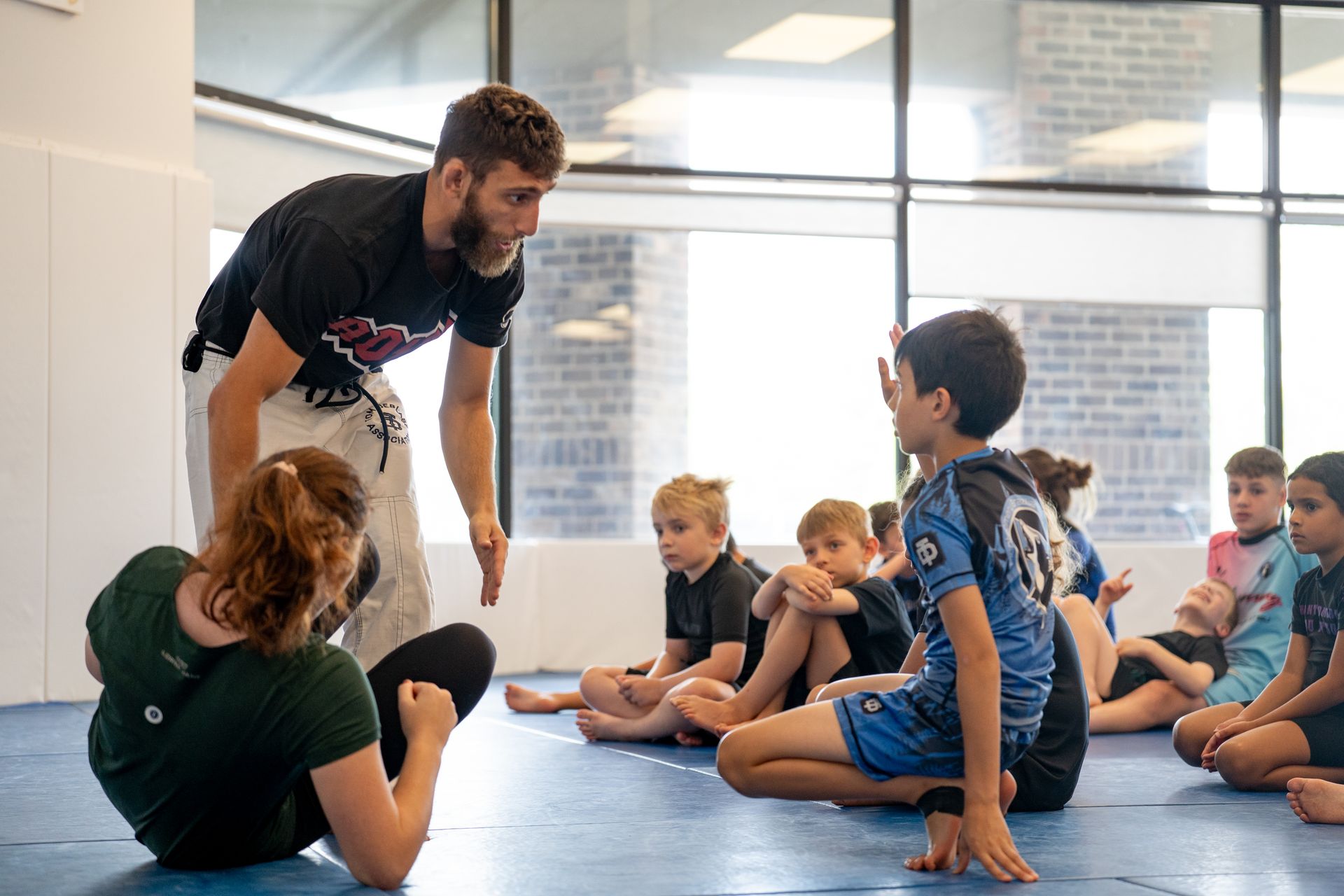
Most beginners worry about two things: looking awkward and not knowing what to do. Both are completely normal. Your first class is not a test. It is an introduction, and our job is to make the room feel structured and welcoming so you can focus on learning.
Typically, your first session includes a warm-up, a few core techniques, and a guided practice portion where you repeat the movement with a partner. We keep the pace controlled. You will not be thrown into intense sparring without preparation, and you will always have a chance to ask questions.
A few things you will notice right away:
- We tap to stop, early and often, and that is considered smart training
- We train with control, because your partner’s safety matters as much as your progress
- We focus on posture, frames, and escapes first, not flashy submissions
Submission highlights get attention online, but fundamentals win in real training. Interestingly, competition data continues to show chokes finishing a large share of matches, around 65 percent in some major events. For beginners, that does not mean you should hunt chokes. It means you should learn the positions and defenses that lead to safe control.
Getting started step by step
Starting Jiu-jitsu in Montgomery, NJ is easier when you treat it like a short ramp, not a giant leap. We recommend a straightforward approach that removes guesswork.
1. Pick a realistic start date and commit to showing up once that week
2. Check the class schedule page and choose two time slots that could work long-term
3. Arrive a little early so we can help you get oriented and answer questions
4. Focus on learning how to move safely, not on “doing well” right away
5. After a few classes, choose a weekly training cadence you can sustain
If you want a simple target, two to three classes per week is a great range for beginners. It is enough repetition to improve steadily, without burning you out or stacking soreness on top of a busy life.
Gear basics: what you actually need (and what can wait)
You do not need a closet full of equipment to begin. For your first class, comfortable athletic clothes are fine, and we will guide you from there. If you decide to continue, you will eventually want a few basics that make training more comfortable and hygienic.
Common beginner gear includes:
- A gi if you are training in the gi, sized so you can move freely without excess fabric
- A rash guard, which helps prevent mat burn and keeps things more sanitary
- Grappling shorts or athletic shorts without pockets or zippers
- A mouthguard, especially if you plan to train regularly
- A small gym bag with water, tape, and a change of clothes
A starter kit often lands around 50 dollars for the basics like a rash guard and mouthguard, depending on what you choose. We will help you understand what matters most, so you are not buying things that sit in a drawer.
Gym etiquette that makes training smoother for everyone
Jiu-jitsu has a few simple norms that keep the room safe, clean, and respectful. None of it is meant to be intimidating. It is more like good mat manners, and you will pick it up quickly.
We coach these habits early because they prevent problems later:
- Keep nails trimmed and remove jewelry before class
- Show up clean, with a clean uniform and fresh training gear
- Tap when you need to, and release immediately when your partner taps
- Listen during instruction so partners do not miss important safety details
- Ask questions, but also expect that some skills take time to feel natural
If you are worried about being the “new person,” we get it. Everyone starts there. Our instructors and experienced students help guide you so you are not left guessing.
Safety, injury prevention, and how we help you train for the long run
Any contact sport carries risk, and Jiu-jitsu is no exception. One widely cited stat in the grappling community is that a majority of athletes report some injury within a six-month window, with higher rates among people training very frequently. That sounds scary until you add context: many issues are minor strains, and smart training habits reduce the risk substantially.
We take safety seriously because consistency is what changes you, not one heroic session. Our approach is to build durable movement patterns and keep intensity appropriate for your experience level.
Key safety principles we reinforce include:
- Learn to tap early, especially while you are still learning joint mechanics
- Prioritize position and posture before applying submissions
- Increase intensity gradually instead of trying to match advanced students immediately
- Communicate with training partners about pace and comfort level
- Take rest seriously, because recovery is part of progress
If you have old injuries or mobility limitations, tell us. We can usually offer modifications, and we can help you choose training partners and rounds that fit where you are right now.
Choosing between gi and no-gi as a beginner
New students often ask whether they should start with gi or no-gi. Both are valuable, and both teach core grappling concepts. The gi slows things down a bit and gives you grips that help you understand control. No-gi tends to feel faster and more slippery, and it emphasizes body positioning and wrestling-style connections.
We like beginners to build a strong base in whichever format you are training, and then expand. A fun detail from high-level competition trends is that athletes with strong gi fundamentals often perform extremely well in no-gi too. For beginners, that is a reminder that basics transfer, and nothing is wasted time when you are learning sound mechanics.
How long it takes to feel comfortable (and what progress looks like)
Most adults want to know a timeline. That is fair. You are investing time, energy, and a bit of courage.
Here is what we see most often:
- After 2 to 4 classes, you recognize common positions and basic rules of engagement
- After 1 to 2 months, you can escape and reset more calmly, even when you are tired
- After 3 months, you start chaining techniques instead of treating every move as separate
- After 6 months, you notice your timing improving and your decision-making speeding up
Progress in Jiu-jitsu is not perfectly linear. Some weeks you feel sharp, and other weeks you feel like you forgot everything. That is normal, and it usually means you are working on something real.
What adult Jiu-jitsu in Montgomery, NJ can do for your fitness and mindset
A lot of people start for fitness and stay for the deeper benefits. Jiu-jitsu is full-body work: pulling, bracing, rotating, posting, and moving through space with purpose. You build strength and conditioning, but you also build coordination and body awareness that many adults have not trained since they were kids.
We also see the stress-management side show up quickly. When you practice staying calm under controlled pressure, everyday stressors tend to feel more manageable. You learn to focus on what you can do next, not on everything at once.
And if self-defense is part of your goal, Jiu-jitsu gives you a practical framework: distance management, clinch control, escapes, and the ability to stay composed in close contact. Even though only around 20 percent of practitioners say self-defense is the primary motivation today, it remains a real benefit of training.
Common beginner questions we hear all the time
Do I need to get in shape before I start?
No. Training is how you get in shape for training. We scale the pace, and you improve quickly when you stay consistent.
Will I have to spar right away?
We introduce live training progressively. Early on, you will focus on drilling and controlled positional work so you can learn safely.
How often should I train as a beginner?
Two to three times per week is ideal for many adults. One class per week still works if that is what your schedule allows, it will just move slower.
What does training usually cost?
Many schools in the region fall in the 100 to 200 dollars per month range. The best way to get exact details is to check the website and talk with us about what fits your schedule and goals.
Is Jiu-jitsu in Montgomery, NJ good for complete beginners?
Yes, when the program is structured for beginners and safety is built into the culture. That is exactly how we run our training: fundamentals first, progress over ego, and clear coaching.
Ready to Begin
If you want Jiu-jitsu to feel approachable, the first win is simply walking in with a plan: start with fundamentals, train at a sustainable pace, and measure progress in small, real improvements. That is how people go from “I have no idea what I’m doing” to moving with confidence, one week at a time.
We built our beginner experience at Montgomery Brazilian Jiu-Jitsu to make that path clear for adults training Jiu-jitsu in Montgomery, NJ, with a class structure that prioritizes safety, skill development, and a community that wants you to stick around long enough to see yourself change.
New to Jiu-Jitsu? Start your journey by joining a Jiu-Jitsu class at Montgomery Brazilian Jiu-Jitsu.