
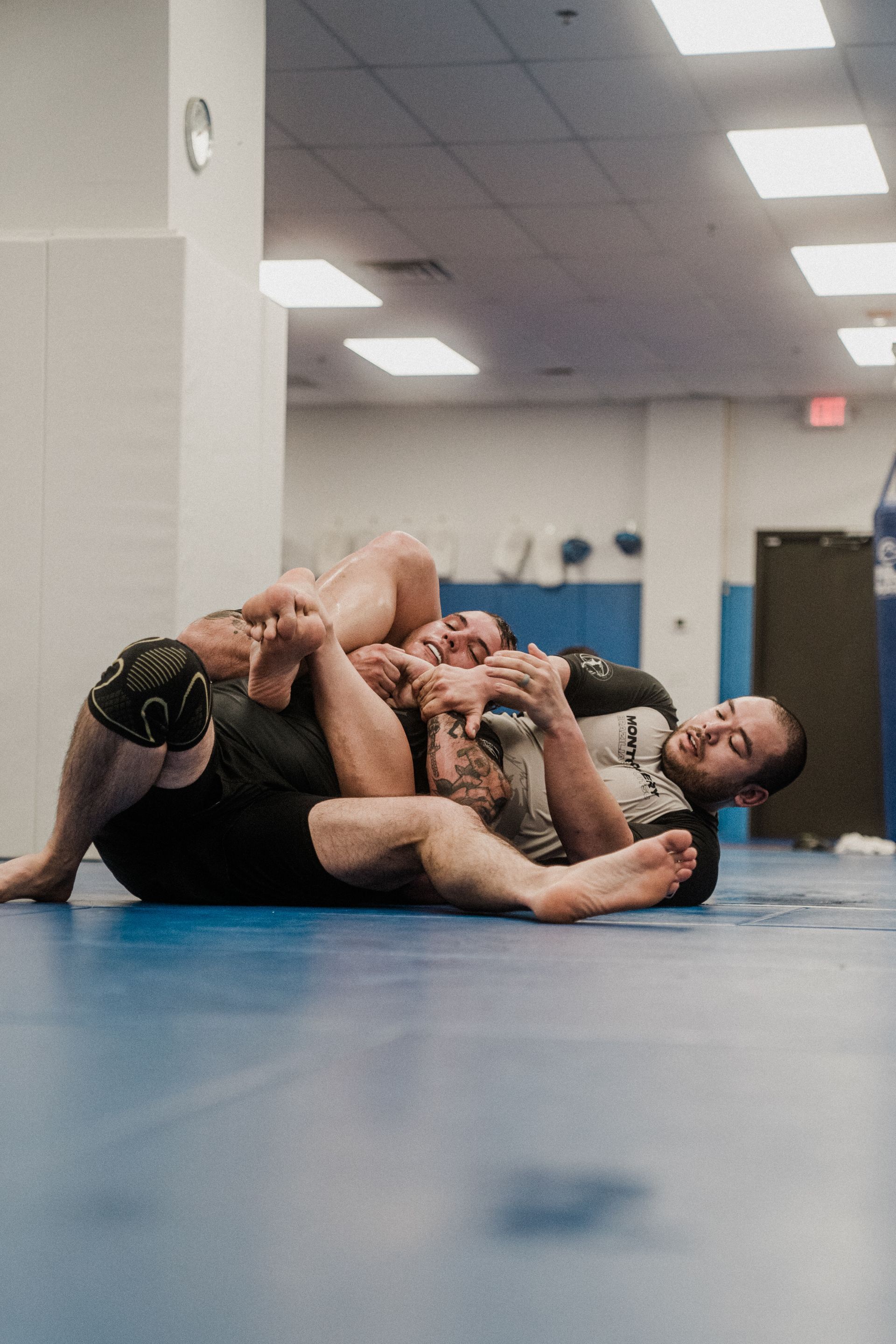
Jiu-jitsu gives teens a structured place to practice self-control, earn real confidence, and keep showing up.
Teen years can feel like a tug-of-war between wanting independence and still needing structure. In Montgomery, NJ, we hear the same concerns from families again and again: focus is slipping, motivation comes in bursts, confidence feels shaky, and stress shows up as irritability or shutdown. Jiu-jitsu meets teens right in that real-world space, because progress is visible, measurable, and earned one class at a time.
We also like that Jiu-jitsu does not require your teen to be naturally aggressive or “built for sports.” In fact, many teens thrive precisely because the art rewards patience, listening, and problem-solving. Our training gives teens a consistent routine where effort matters, respect is non-negotiable, and confidence grows from doing hard things safely.
If you are looking for a practical activity that supports discipline at home and confidence at school, Jiu-Jitsu in Montgomery, NJ can be a surprisingly effective answer. The best part is that the lessons tend to “stick” because your teen experiences them in their body, not just as advice.
Why discipline is a skill, not a personality trait
Discipline is often described like something you either have or you do not. In our experience, discipline is a trainable skill, and teens build it fastest when expectations are clear and feedback is immediate. Jiu-jitsu provides both. You learn a technique, you drill it with intention, and you notice right away what works and what does not. That loop teaches responsibility without a lecture.
We structure classes so teens know what is coming next: warmups, technical instruction, drilling, and controlled practice. That predictable rhythm matters more than people think. It creates a calm environment where teens can focus, even if their day has been loud or stressful. Over time, the structure becomes internal. Teens start managing their own effort, their own pace, and their own reactions.
Discipline also shows up in small things: being on time, tying your belt correctly, listening when an instructor explains a detail, and treating training partners with respect. These moments are not “extras.” They are the training.
The confidence teens gain is real because it is tested (safely)
Confidence is tricky, because teens can spot “fake confidence” from a mile away. What Jiu-jitsu builds is earned confidence: the kind that comes from competence, not from bravado. When a teen learns how to move on the ground, how to stay calm under pressure, and how to solve a problem in real time, posture changes. Eye contact changes. The way someone walks into a room changes.
A key reason is that Jiu-jitsu teaches body awareness and control. Teens learn how to create space, how to keep balance, and how to breathe through uncomfortable moments. That ability carries into everyday life. When school feels overwhelming or social situations get awkward, the teen who has practiced staying calm in training often handles those moments with more steadiness.
We keep the environment supportive and safety-first. Teens do not have to “win” practice to benefit from it. Instead, we focus on improvement, coachable habits, and building confidence without intimidation. That is where long-term growth comes from.
What a typical teen class looks like in our academy
When you picture a martial arts class, you might imagine chaos or constant contact. Our teen training is organized and supervised, with clear expectations and a steady pace. We teach technique first, then we build repetition, then we add resistance gradually so teens can apply what they learned.
A typical class includes:
- A warmup that builds coordination and mobility, not just exhaustion
- Technique instruction with specific details teens can actually remember
- Partner drilling where we reinforce control, safety, and communication
- Optional controlled sparring, matched for experience and size whenever possible
- A short wrap-up that reinforces mindset, respect, and consistency
This structure is one of the reasons teens who struggle with attention or motivation often do well. There is always a next step, and there is always a clear way to improve.
The “hidden curriculum”: respect, self-control, and communication
Parents often come in looking for confidence or self-defense, and those are valid goals. What surprises many families is how much Jiu-jitsu quietly teaches communication and emotional regulation. Your teen has to work with a partner. Your teen has to control intensity. Your teen has to reset after a mistake. Those are life skills.
We also emphasize respectful behavior as a baseline. That means listening when someone is speaking, taking care of training partners, and learning how to compete with yourself more than with the room. Teens learn to handle feedback without spiraling and to handle success without showing off. That balance is hard to teach in a normal setting, but on the mats it becomes part of the culture.
If your teen tends to react quickly, training gives a place to practice pausing. If your teen tends to doubt themselves, training gives a place to prove, through action, that improvement is possible.
How Jiu-jitsu helps with bullying and social pressure
We are careful about how we talk about bullying. The goal is not to turn your teen into a fighter. The goal is to help your teen feel less powerless and more aware, so fear does not run the show. Jiu-jitsu supports that in a few concrete ways.
First, teens gain situational confidence. When someone has practiced controlling distance, managing grips, and staying balanced, everyday intimidation tends to lose its edge. Second, teens learn to stay calmer under stress. That calm changes how others perceive them, and it changes the decisions your teen makes in the moment.
Third, Jiu-jitsu develops practical self-defense fundamentals and the idea of using the least force necessary while staying safe. We teach control and responsibility. That matters, because teens need tools that fit real life, not a fantasy scenario.
When confidence rises, many teens naturally set better boundaries. They speak up sooner. They avoid risky situations more effectively. And they carry themselves with a steadier presence that often discourages problems before they start.
Why teens who are not “sporty” often thrive here
One reason Jiu-jitsu has grown so quickly is that it rewards problem-solving and consistency more than raw athletic talent. Yes, fitness improves, but you do not need to arrive in peak shape. Teens who do not enjoy traditional team sports often appreciate that progress is personal. You are not stuck in a role. You are not waiting for someone to pass you the ball. You are learning a skill set that builds week by week.
We also see strong progress from teens who are thoughtful, analytical, or a little shy. Jiu-jitsu gives them a way to “speak” through movement. They start to trust their decisions because the art is full of cause and effect. Small adjustments create big results, and that is motivating.
If your teen is anxious, training can become a healthy outlet. The mind gets a break because the body has something specific to do. You focus on grips, balance, posture, and breathing. The mental noise quiets down, at least for a while, and that can be a big deal.
Physical benefits that support discipline and confidence
Confidence is not only mental. It is also physical. When teens feel stronger, more coordinated, and more capable, it changes how they show up in daily life. Our classes build athletic traits that translate well outside the academy.
We regularly see improvements in:
- Coordination and balance through footwork, base, and movement drills
- Stamina and recovery as teens learn to pace effort during rounds
- Mobility and flexibility from the positions used in grappling
- Core strength and posture, especially for teens who sit a lot during school
- Body awareness, which helps reduce clumsy injuries and builds control
These changes are gradual, but they compound. And because teens can feel the difference in their body, motivation becomes easier to sustain.
A simple way to understand progress: the teen training journey
Teens usually go through recognizable phases in Jiu-jitsu. Knowing this helps parents set realistic expectations, and it helps teens avoid quitting too early. Here is the pattern we often see:
1. Orientation phase: your teen learns rules, safety, and basic positions, and everything feels new
2. Foundation phase: technique starts to make sense, and your teen can repeat movements with less hesitation
3. Confidence phase: your teen begins solving problems live, staying calmer, and bouncing back after mistakes
4. Ownership phase: your teen starts setting personal goals, asking better questions, and training with more intention
Each phase builds discipline. Each phase builds confidence. The key is consistency, not perfection.
How we keep training safe and teen-friendly
Safety is not an afterthought in Jiu-jitsu. It is part of how we teach, how we pair partners, and how we manage intensity. We coach teens to prioritize control over force. We also reinforce tapping early and respecting taps immediately. That culture makes a difference.
We supervise training closely and keep classes structured so teens are not left to “figure it out” in a risky way. Techniques are taught in a progressive order, and we focus on body mechanics that work without reckless speed. For nervous beginners, that approach helps training feel approachable right away.
Parents also appreciate that the academy is a place where teens can burn energy without chaos. There is effort, there is challenge, but there is also order. That combination is where confidence grows.
How families fit Jiu-jitsu into a Montgomery schedule
Montgomery families are busy. Between school, homework, and activities, adding one more commitment can feel like a lot. We design our class schedule to be clear and predictable, so you can choose a routine that works. Most teens do best with steady attendance, even if it is only a couple of days per week.
We also encourage a simple mindset: treat training like an appointment with your future self. When teens show up consistently, we can coach them more effectively, and they start seeing progress faster. That progress creates momentum, which makes it easier to keep going during the weeks when motivation dips.
For parents who want to train too, our adult program is a natural fit. Adult Jiu-Jitsu in Montgomery, NJ gives you your own structured outlet, and it can become a shared family routine without forcing everyone into the same class experience.
Take the Next Step
Building discipline and confidence does not require a dramatic personality change. It requires a training environment where expectations are clear, progress is earned, and teens feel supported as they grow. That is what we focus on every day, and it is why families around Montgomery make Jiu-jitsu part of their routine.
If you want a place where teens can channel energy, build non-aggressive confidence, and develop real self-control, we would be glad to help you get started at Montgomery Brazilian Jiu-Jitsu. You can also explore how our teen program connects with our adult offerings, so the whole household has a positive outlet at Montgomery Brazilian Jiu-Jitsu.
Continue your martial arts journey beyond this article by joining a class at Montgomery BJJ.