
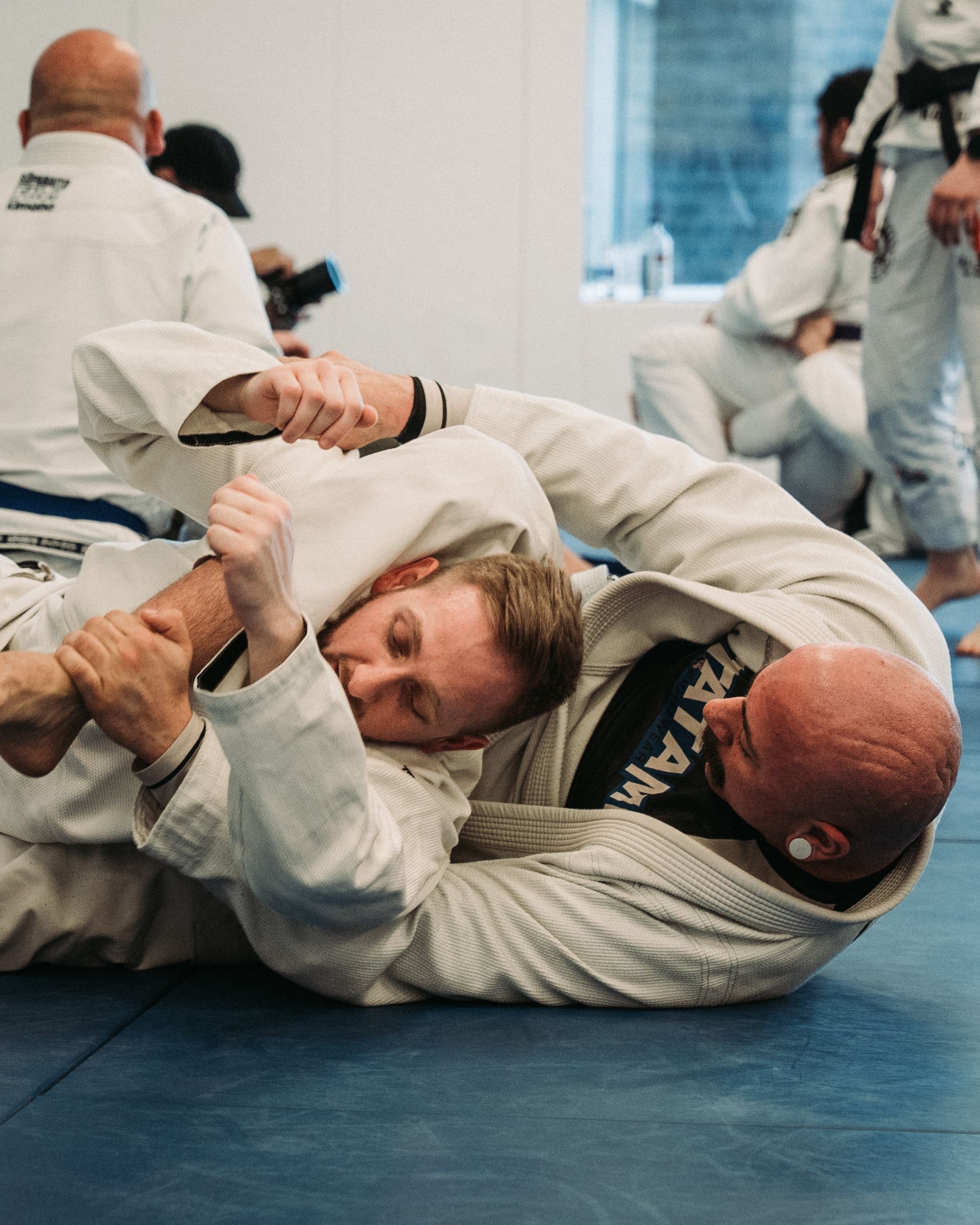
Jiu-jitsu can be one of the most practical, low-impact ways to keep your body steady, your mind sharp, and your week a little more fun.
If you have ever looked at martial arts and assumed it is all hard falls and harder impacts, you are not alone. A lot of adults in Montgomery tell us the same thing before their first class, especially if knees, hips, shoulders, or back stiffness are already part of daily life. The good news is that Jiu-jitsu (specifically Brazilian Jiu-Jitsu) is built around leverage, angles, and timing, not brute force.
For seniors, that matters. When training is structured correctly, Jiu-jitsu becomes a smart way to improve balance, coordination, flexibility, and joint mobility, which all connect directly to reducing fall risk and staying independent. We also see another benefit that surprises people: the mental side. Learning techniques, remembering sequences, and solving problems in real time can be a genuine brain workout, not just a fitness routine.
In this guide, we will break down how our training supports seniors in Montgomery, NJ, what a first month can look like, and how we keep the experience safe, welcoming, and adaptable.
Why seniors in Montgomery are turning to Jiu-jitsu for real-world fitness
Aging is not the problem. Losing options is. Many traditional workouts narrow down over time: walking is fine until the weather turns, cycling is great until joints flare up, and weight machines help until mobility becomes the limiting factor. Jiu-jitsu, when coached with care, tends to widen options because it trains the missing links: stability, coordination, controlled movement, and getting comfortable with transitions.
Falls are one of the biggest threats to long-term independence, and balance is not just a talent you either have or do not have. It is trainable. On the mats, we practice how to shift weight, stabilize through the core and hips, and move safely from standing to the ground and back up. That is not flashy, but it is useful.
We also keep intensity adjustable. A senior does not need wild scrambles to get benefits. Controlled drills, positional practice, and light sparring (or none at all, if you choose) can still build strength, circulation, and confidence without pounding joints.
How Jiu-jitsu improves balance and helps prevent falls
Balance is a blend of awareness, leg and hip strength, ankle and foot control, and reflexive correction when your center of gravity shifts. Jiu-jitsu trains all of that in a very honest way, because you are constantly learning where your base is and how to protect it.
The three balance skills we train every week
Base, posture, and alignment show up in almost every class, even if it does not feel like balance training in the moment.
• Base: We teach you how to keep stable contact points with the floor, whether you are standing, kneeling, or seated, so a small bump does not become a big problem.
• Posture: We work on keeping your spine supported and your head positioned well, which improves stability and reduces strain.
• Weight transfer: You practice moving your weight smoothly during steps, turns, and transitions, which is exactly where many stumbles happen in real life.
Over time, you start noticing the carryover. Stepping off a curb feels cleaner. Turning quickly in the kitchen feels less awkward. Even walking on uneven ground feels more confident because your body has rehearsed correction patterns.
Joint-friendly strength and mobility without high impact
One reason Jiu-jitsu works well for older adults is that it is not dominated by jumping, striking, or repetitive pounding. We focus on controlled resistance and positioning. That translates into strength gains that are practical: grip strength, hip stability, core endurance, and upper back engagement that supports posture.
Mobility is a big part of how we structure classes, too. Many seniors do not need to stretch harder, but to move more often through safe ranges. Gentle hip escapes, shoulder-safe frames, and controlled rotations help lubricate joints, improve circulation, and reduce stiffness.
If you are dealing with arthritis, previous injuries, or joint replacements, we adjust positions and choose techniques that fit your body. There is no prize for forcing a shape your joints do not like. Progress comes from consistency, not from pain.
Cardio and endurance that feels doable, not punishing
A common question is whether grappling is “too much cardio.” The honest answer is that it can be, if you go too hard too soon. We do not run classes that way for seniors. Instead, we build an aerobic base with rounds that are short, controlled, and guided.
Many adults find that two to three sessions per week, even at 45 to 60 minutes, starts improving stamina in everyday life. Walking upstairs gets easier. Carrying groceries feels less taxing. And because Jiu-jitsu uses the whole body, you build endurance in a way that does not feel like staring at a treadmill clock.
The CDC guideline of about 2.5 hours of moderate activity per week is a useful target, and our class schedule can fit that without needing daily high-intensity workouts.
The cognitive side: why learning Jiu-jitsu keeps your mind sharp
There is a mental clarity that comes from learning something new, especially when it is tactile and requires decision-making. Jiu-jitsu is basically problem-solving with your body. You learn to recognize patterns, anticipate common reactions, and choose the next best step.
We see seniors enjoy the “chess” part of training. You are not memorizing random moves. You are learning principles: how to create space, how to manage pressure, how to use leverage, and how to stay calm when positions change.
Research on older adults learning new skills has shown meaningful cognitive benefits, including improved memory and sharper mental processing. While a martial art is not the same as a lab study, the underlying mechanism is similar: novelty, repetition, and progressive challenge. Many students tell us their focus improves in everyday tasks, and it is not unusual to feel a mood boost after class as stress drops and endorphins kick in.
Confidence, self-efficacy, and the calm that comes with competence
A quiet benefit of training is the sense of capability that grows over time. For seniors, that can be deeply practical. You learn how to move with someone in close range, how to protect yourself if you get off balance, and how to stay composed when things feel unfamiliar.
We emphasize control and safety, so confidence does not come from “winning.” It comes from knowing you can breathe, frame, and get back to a stable position. That feeling tends to spill into the rest of life. You stand taller. You walk a little more decisively. You feel less fragile, which is a big deal.
Community matters more than people expect
A lot of fitness plans fail for one reason: isolation. When you train in a group, you have a reason to show up, even on days when motivation is low. Jiu-jitsu gyms are known for strong community bonds, and participation surveys in grappling gyms show extremely high reports of belonging, respect, and positive life-skill transfer.
We keep our culture welcoming, especially for new adults. You will learn names, share small wins, and get coached through awkward beginner moments. Nobody starts smooth. The room knows that, and it helps.
For seniors in Montgomery, NJ, that social layer can matter as much as the physical benefits. It gives you structure, friendly accountability, and a place where progress is noticed.
What to expect in our senior-friendly adult program
We design adult Jiu-jitsu in Montgomery, NJ with scalability in mind. That means you can start where you are, whether you have trained before or not, and build up gradually. We also explain the “why” behind techniques, which helps seniors learn faster and feel safer.
A typical 45 to 60 minute class flow
Here is a straightforward outline that matches what many seniors prefer, with options to dial intensity up or down:
1. Warm-up and joint prep: 10 minutes of movement that loosens hips, shoulders, and spine without rushing.
2. Mobility and foundational drills: 15 minutes focused on safe ways to move on the ground and maintain posture.
3. Technique and partner practice: 20 minutes learning one concept and repeating it with coaching.
4. Optional positional rounds: 10 minutes of controlled practice, with partners matched by size, experience, and goals.
If you choose not to spar, you can still get excellent results from drilling, positional work, and movement training. We will help you find the right mix.
Safety, joint issues, and smart modifications
Safety is not a slogan. It is a set of habits: controlled pace, clear communication, and choosing the right training partners and positions. If you have joint issues, we pay attention to a few specific areas.
• Neck and spine: We coach posture and tapping early, and we avoid cranking movements.
• Knees: We modify kneeling positions, reduce twisting pressure, and pick techniques that keep knees aligned.
• Shoulders: We teach frames and angles that protect the shoulder joint and limit overextension.
• Hands and fingers: We show safer gripping options and encourage breaks if grips feel inflamed.
We also offer private lessons at 50 per hour for seniors who want a personalized plan, a slower learning pace, or help working around a specific limitation. Private training can be a comfortable on-ramp, especially if returning to exercise feels intimidating.
Timeline: what improvements you may notice and when
Everyone progresses differently, but seniors tend to notice a few changes in a predictable order.
In the first couple of weeks, many students feel better body awareness. You start understanding how to shift weight and keep a stable base. Within a few weeks, balance and mobility improvements become noticeable in daily tasks. Around the one to one-and-a-half month mark, the mental side often clicks: you remember techniques more easily, you feel less overwhelmed, and you start anticipating what comes next.
Strength and endurance build steadily with consistent attendance. The key is not perfection. It is showing up, letting your body adapt, and keeping training sustainable.
A note on circulation, energy, and even libido for adults over 40
This is not talked about enough, but it matters. Regular, moderate activity supports circulation, cardiovascular health, and overall energy levels. Many adults over 40 notice that when circulation improves and stress drops, sleep quality can improve too, which affects everything, including libido.
Jiu-jitsu offers a mix of movement, resistance, and breathing under mild pressure, which can be a powerful combination for whole-body vitality. We keep the training appropriate for your age and condition, but the upside can still be surprisingly broad.
Take the Next Step with Montgomery Brazilian Jiu-Jitsu
Building agility, balance, and vitality does not require high-impact workouts or a background in athletics. With the right coaching and a steady pace, Jiu-jitsu can be a realistic long-term practice that strengthens your body, sharpens your mind, and connects you with a supportive room in Montgomery.
When you are ready, we will guide you into training that respects your joints, matches your goals, and makes progress feel clear week to week. That is exactly how we run our seniors and adult Jiu-jitsu in Montgomery, NJ at Montgomery Brazilian Jiu-Jitsu, and we would be glad to help you get started.
Ready to begin your training journey? Join a Brazilian Jiu-Jitsu class at Montgomery BJJ today.